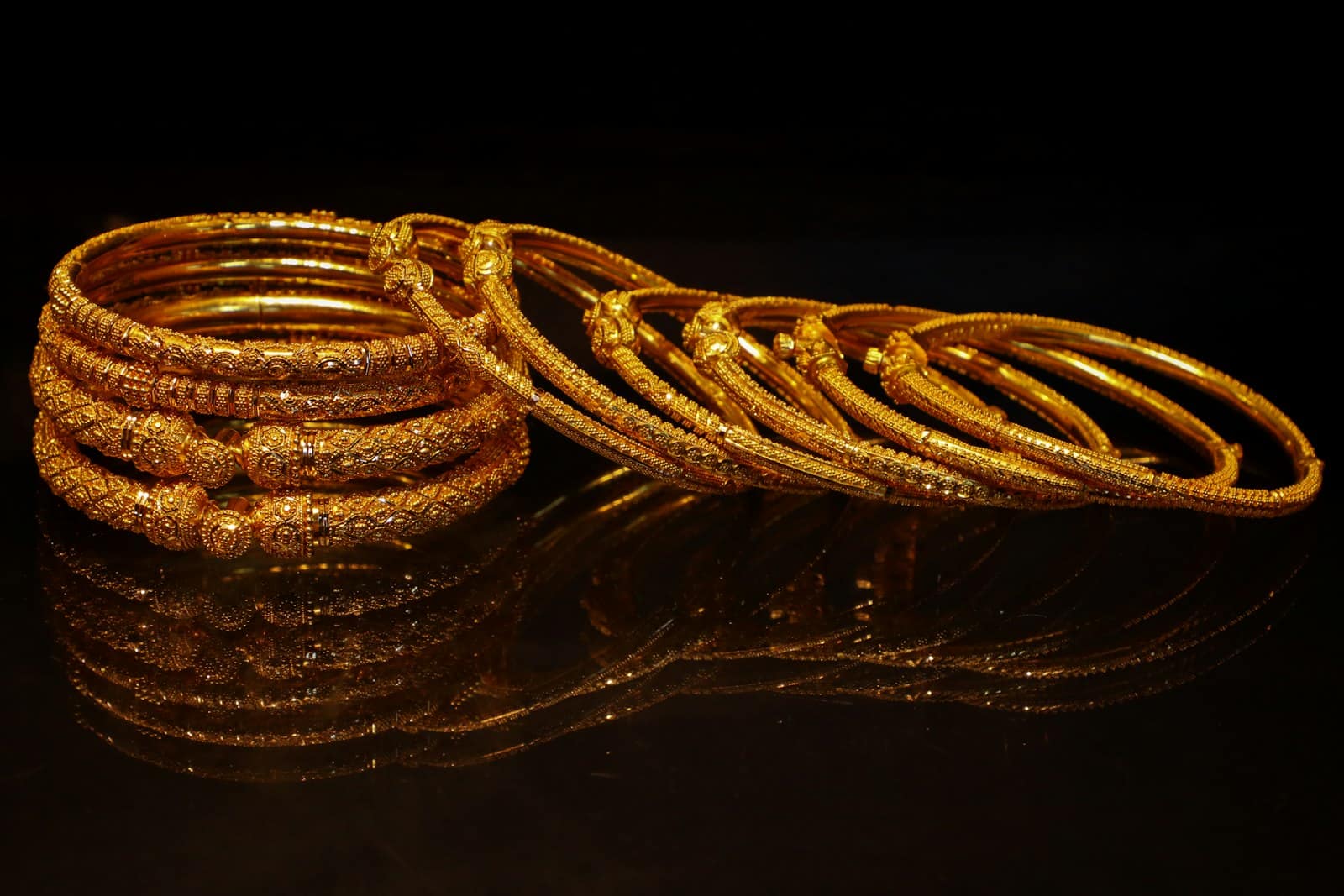
Pledging costs you interest and a fee. Selling costs you nothing up front, but if you want the gold back you pay the buyer's deduction now, and a new making charge and 3% GST when you buy again. For a few months, the loan usually costs less. The calculator below shows you the real numbers.
Sell or pledge calculator
Enter how much gold you have and how much money you need for how long. Open “Change the costs” to use your own buyer's deduction and loan rate.
Change the costs (buyer's deduction, loan interest, gold price)
The starting numbers are examples only. Use the deduction your buyer quotes and the rate your lender offers.
Pledging costs about ₹16,956 less, if you want the gold back.
Sell, then buy back
- Gold to sell
- 11.92 g
- Buying it back in 6 mo
- ₹1,75,206
Cost ₹25,206
Pledge for a gold loan
- Interest for 6 mo
- ₹7,500
- Processing fee
- ₹750
Cost ₹8,250
Gold valued at today's IBJA rate (₹12,973 per gram for this purity). Pledging assumes you repay the loan and interest in one go at the end. If you never want the gold back, selling has no buy-back cost. This tool does not include any tax.
How the two costs are worked out
- Selling: it works out how many grams you would sell to raise the money after the buyer's deduction. The cost is what buying those grams back would take later, with a making charge and 3% GST, minus the money you got. Move the gold price slider to see what a rise or fall does.
- Pledging: simple interest on the amount for the months you need it, plus the processing fee, assuming you repay everything at the end. It also checks the loan stays inside RBI's loan-to-value limits for your gold.
When selling makes more sense
- You do not plan to buy the gold back. Then there is no buy-back cost, and selling avoids interest.
- You need the money for a long time, so the interest would add up past the cost of buying again.
- The sum you need is more than RBI's limits let you borrow on the gold you have.
When pledging makes more sense
- You want the same jewellery back, especially pieces with high making charges or family value.
- You need the money for weeks or months, not years.
- The buyer's deduction is high, so selling would lose a lot on day one.
Before pledging, compare the per-gram value and interest rate of two or three lenders. Our gold loan page shows the most you can borrow and works out an EMI if you prefer monthly payments.
RBI rules that protect you when you pledge
- You must be present when your gold is tested, and you get a certificate with its purity, net weight, deductions and value.
- Lenders value only the gold, at the lower of the 30-day average and the previous day's IBJA price; stones add nothing.
- After you repay in full, your gold must be returned within seven working days, or the lender pays you ₹5,000 for each day of delay that is its fault.
- If gold is auctioned, you get notice first, the reserve price cannot be below 90% of its value, and any surplus comes back to you.
If you decide to sell instead, check the purity the buyer finds against your hallmark first; our hallmark and HUID guide shows how. Nothing here is financial advice.
Sources
Questions people ask
Is it better to sell gold or take a gold loan?
If you want the gold back later, a gold loan is usually cheaper, because selling and buying back means paying the buyer's deduction, a new making charge and 3% GST again. If you will never buy it back, selling avoids interest. The calculator compares the two on your numbers.
How long can a gold loan be with one repayment at the end?
Under RBI's 2025 directions, consumption gold loans repaid in one bullet payment at the end are capped at 12 months, though they can be renewed.
How much can I borrow against my gold?
Up to 85% of its value for total loans up to Rs 2.5 lakh, 80% up to Rs 5 lakh, and 75% above that, valued at the lower of the 30-day average and the previous day's IBJA price for its purity.
Does this calculator include tax?
No. It compares the cost of the two routes before any tax. Ask a tax adviser how selling would be taxed in your case.